
2 MIN READ
What Multifamily Investors Should Know About Self Storage
 DXD Capital
October 27, 2025
DXD Capital
October 27, 2025


5 MIN READ
April 10, 2026
Does real estate drive business failure?
Think about two giants that collapsed. Blockbuster Video and Sears. They once dominated their industries. Was their real estate a factor in their downfall? And is the same lesson about business disruption playing out right now in office real estate?
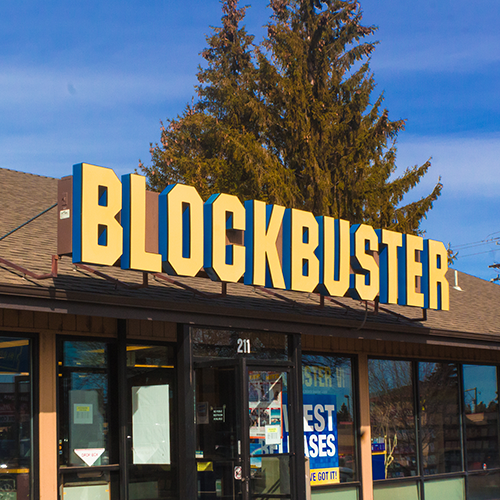
During my childhood, Blockbuster Video was everywhere. It was a part of the weekend routine, like Saturday-morning cartoons or mowing the lawn. Where Blockbuster wasn’t, Hollywood Video or a local mom-and-pop rental store filled the gap. Businesses often fail for familiar reasons—too much debt, overexpansion, or diversifying into unrelated sectors. While some of these factors likely contributed to Blockbuster’s demise, the core issue was that VHS tapes were far inferior in quality, cost, and convenience compared to Netflix’s DVD delivery service, which brought movies directly to your door. If Netflix’s DVD home delivery weakened Blockbuster, streaming services delivered the fatal blow. Blockbuster had good real estate, but they just had a product that didn’t need the real estate they had. The poor product causes the real estate to fail, not the other way around.
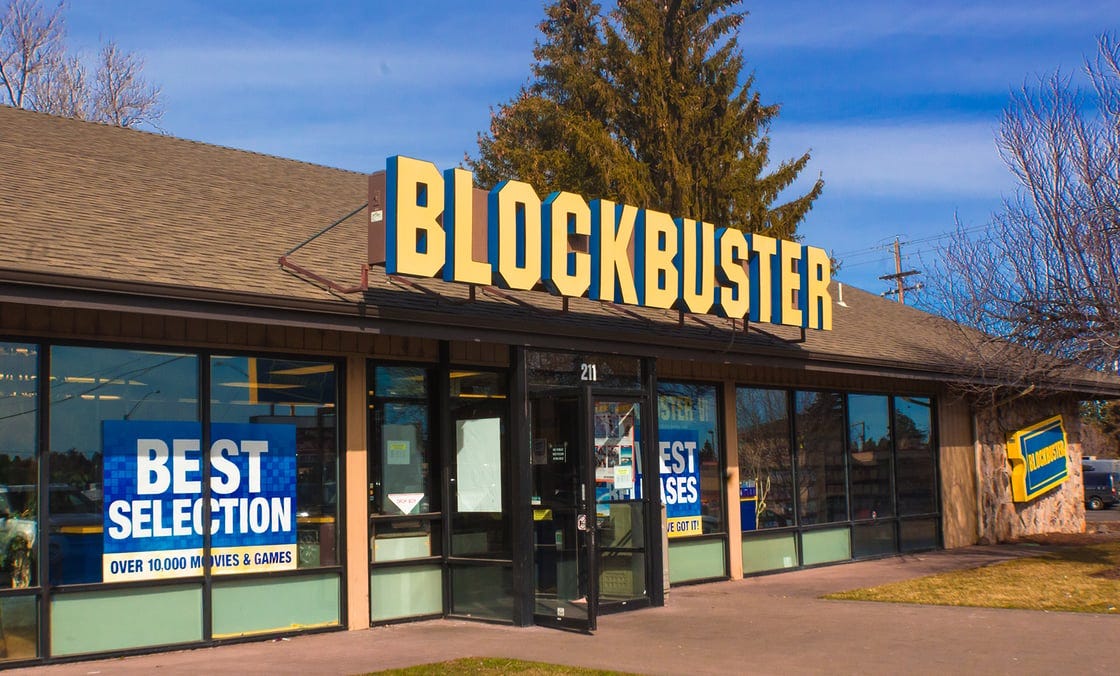
Blockbuster Video Store • Source: Adobe Stock Imagery
In the 1960s and 1970s, Sears was the dominant indoor mall anchor, the proverbial 800-pound gorilla that dictated terms to landlords. Malls were built because Sears was the anchor tenant, and weren’t built if Sears wasn’t on board. Like Blockbuster, Sears was everywhere customers expected them to be. Sears’ failure is a business school case study with many contributing factors. They didn’t adapt to shifting consumer preferences or the rise of e-commerce—even though their catalog was an early precursor to online retail. Sears also focused on a wide range of big-ticket items, creating the “department store” model, which couldn’t compete with specialty retailers like Home Depot and Best Buy that offered greater variety in specific categories. Meanwhile, Walmart and Target attracted weekly shoppers with everyday essentials. Sears’ inability to evolve compounded the decline of indoor malls, which began in the 1990s and peaked in the 2000s. Did department stores fail because indoor malls lost popularity, or did the decline of department stores doom the malls? Likely a bit of both. Real estate played a significant role in Sears’ downfall, and their reluctance to adapt sealed their fate.
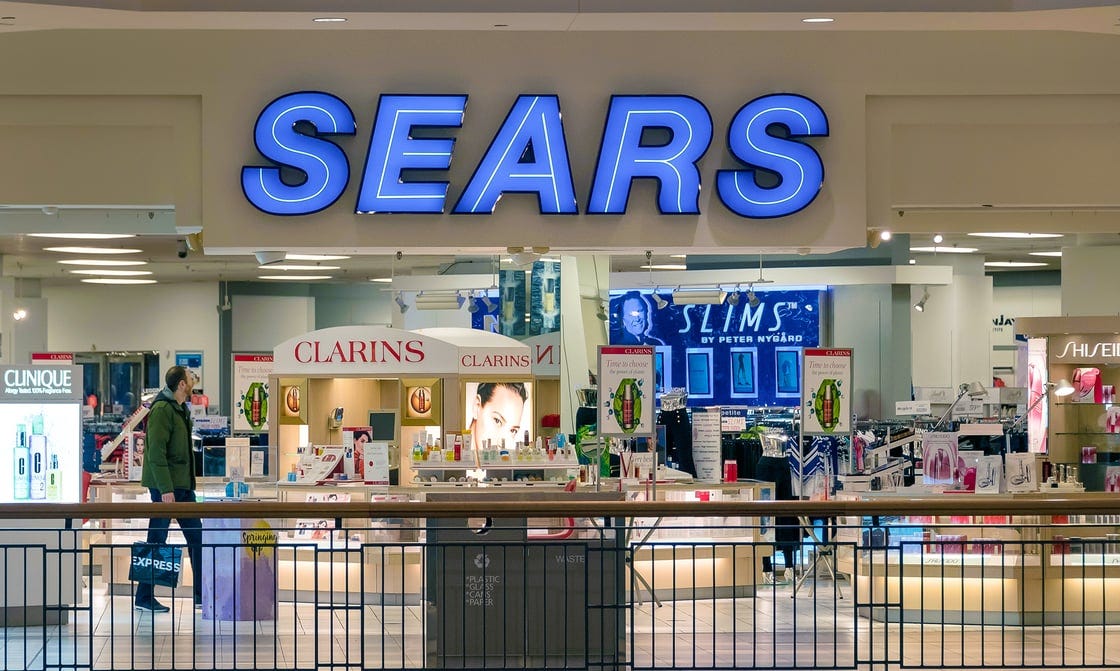
Sears Department Store Mall Entrance • Source: Adobe Stock Imagery
What does this mean for white-collar businesses and the office spaces they occupy? Are they destined for a similar outcome?
AI and the rise of remote work have disrupted the demand for office space, perhaps permanently. These changes are as groundbreaking as air conditioning and elevators were for office buildings in their time. The traditional office space, where white-collar jobs flourished for 75 years, may never recover as AI replaces them.
However, AI-proof jobs need office environments, maybe even more so now. Remote work cannot fully replicate the camaraderie, mentorship, and collaboration that come from working together in person. Studies show that job satisfaction significantly declines without in-person interaction and the professional growth that arises from spontaneous conversations with colleagues.
Older Gen Z and younger millennials entering the workforce are realizing that while working remotely sounds appealing, it doesn’t always feel fulfilling. How do you build a strong connection with your boss through Slack? How do you foster camaraderie with coworkers if you never have a lunch break together? How do you benefit from a passing conversation with the coworker in the next cubicle who might offer valuable advice? Office environments provide these intangible but essential benefits.
Just as jobs can be categorized as AI-proof or AI-vulnerable, office spaces may follow a similar trajectory. As AI kills back-of-house jobs and the space they once occupied, it also increases the importance of collaborative spaces for AI-proof jobs. Offices that promote interaction and innovation will command higher rents, and companies will pay them because downsizing their overall footprint will offset the higher per-square-foot rent.
Reading this article Office Buildings Going for 90% Off was shocking. Steep discounts like these are for AI-vulnerable office space where jobs are being lost and will never be replaced by humans again.
LOAD MORE
1 MIN READ
DXD Capital
August 03, 2021