4 MIN READ
The Roll Up: DXD Capital opens Public Storage-branded store in Miami metro
 DXD Capital
May 29, 2024
DXD Capital
May 29, 2024
- Self Storage Industry


4 MIN READ
May 30, 2026
I’m pretty sure no one dreamed of graduating from high school with aspirations of working in a cubicle. At the risk of overspeculating, I am going to bet that those working in a cubicle didn’t put a whole lot of thought into their career paths. I worked in a cubicle as an intern for Intel in Chandler, AZ. I learned that I hated cubicles and didn’t want a job that required an ID badge or a pager. Everyone at Intel had to have a pager in the late 90’s, and that seemed miserable to me.
For those graduates who were destined to live for 8 hours a day in a grey fabric-covered cubicle, far from a window but next to the woman who scrapes her yogurt cup for 15 minutes after the last bite was gone, their chances of cubicle life are diminishing. That’s the good news. The bad news is that cubicles are being replaced with AI and offshoring. It’s likely that many of the back-office jobs that are being offshored will ultimately be replaced by AI as well.
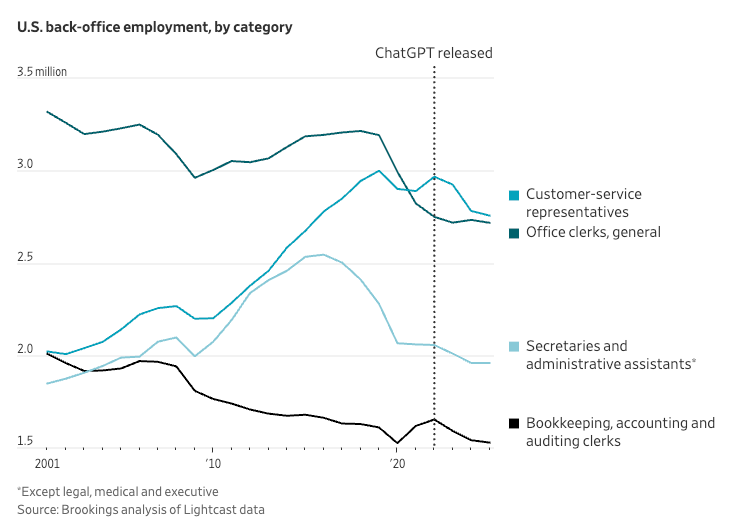
Phoenix has been one of the cities leading the cubicle revolution since the 80’s, until AI that is. According to my friends in economic development, back-office call center jobs were the most likely to pack up and leave a city for a better deal in another state or country. They were good jobs, especially for young grads, but they are not going to change the economic trajectory of a city like Phoenix the way some of today’s opportunities do. Like TSMC’s commitment to spend $165 billion on six semiconductor fabrication facilities, or the $32 billion Intel is about to spend to build two new fabs. That’s 3000 new jobs on top of the 10,000 Intel already has in the Phoenix metro area. Phoenix is on the short list for many tech companies, from EV battery plants to supercomputing and solar.
Having a kid that just graduated high school, AI-proof college studies, and jobs are top of mind. There is definitely some pushback on AI from younger generations, but it’s not going to stop the train. Not everyone who was working in the back office will fit into the tech ecosystem, so what happens? Where do they go?
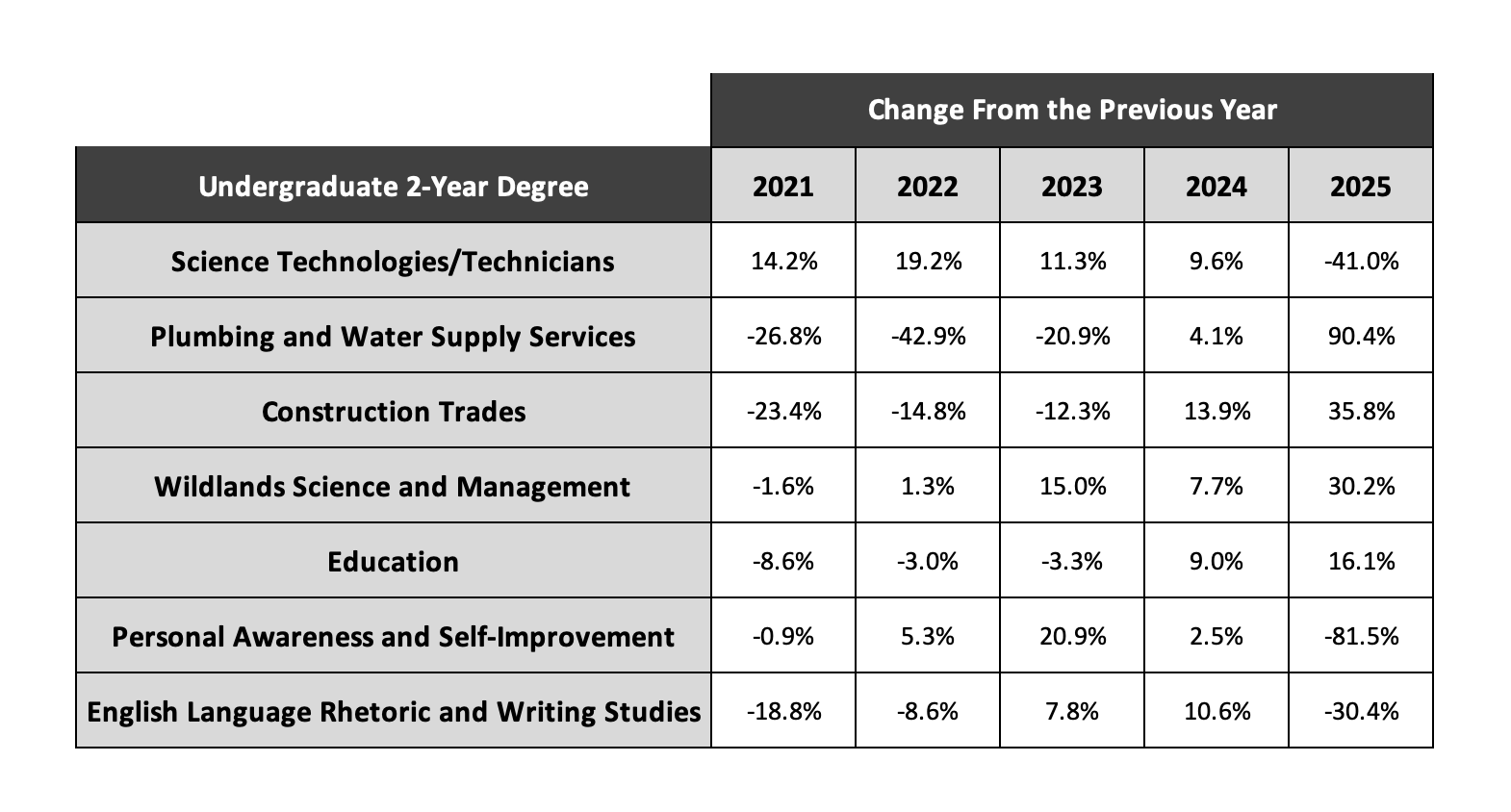
The best opportunities for an AI-proof job are taught at 2-year trade or vocational schools. Enrollment in these schools is up, just as enrollment at 4-year bachelor’s degree universities is going down. What kind of jobs are AI-proof and what are not?
Take a look at the year-over-year enrollment in 2-year undergraduate degrees across the US:
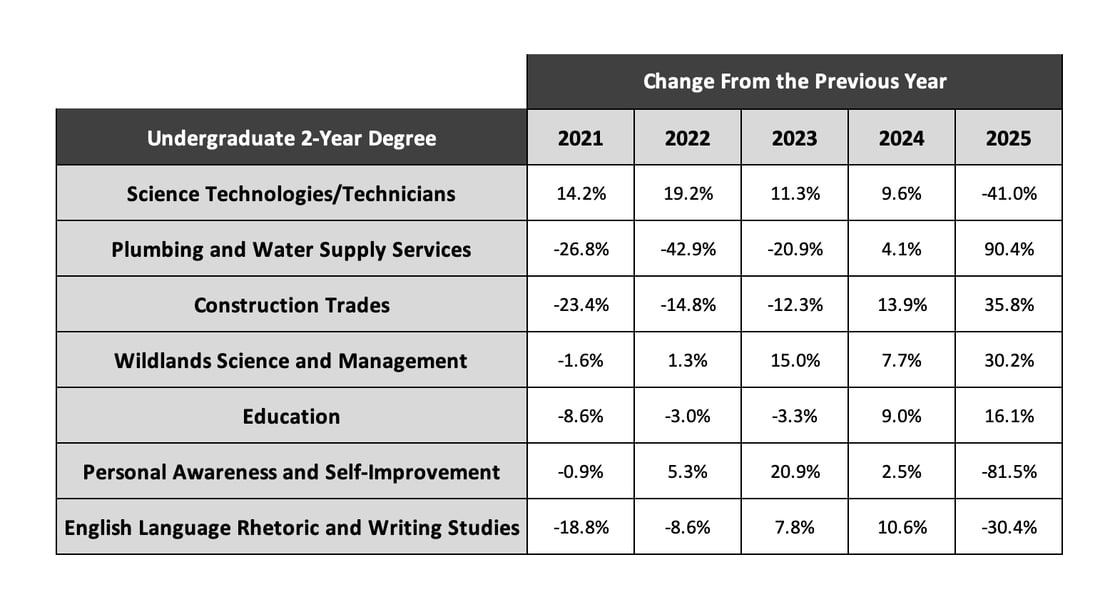
Source: National Student Clearinghouse Research Center
The cubicle was never the dream. Maybe losing it is the permission slip a whole generation needed to find something better.
LOAD MORE
4 MIN READ
DXD Capital
May 29, 2024
3 MIN READ
 Drew Dolan
March 06, 2024
Drew Dolan
March 06, 2024
3 MIN READ
DXD Capital
June 01, 2024