2 MIN READ
Affordable Housing Ordinances Backfire
 Drew Dolan
September 09, 2024
Drew Dolan
September 09, 2024
- Commercial Real Estate Insights


5 MIN READ
December 06, 2025

It's not hard to see that the US is in a housing crisis when you hear statistics like:
The American dream of homeownership, once just a matter of saving enough for a down payment, now feels unattainable. We are in this situation because we’re building 25% fewer homes annually than the average over the past 50 years.
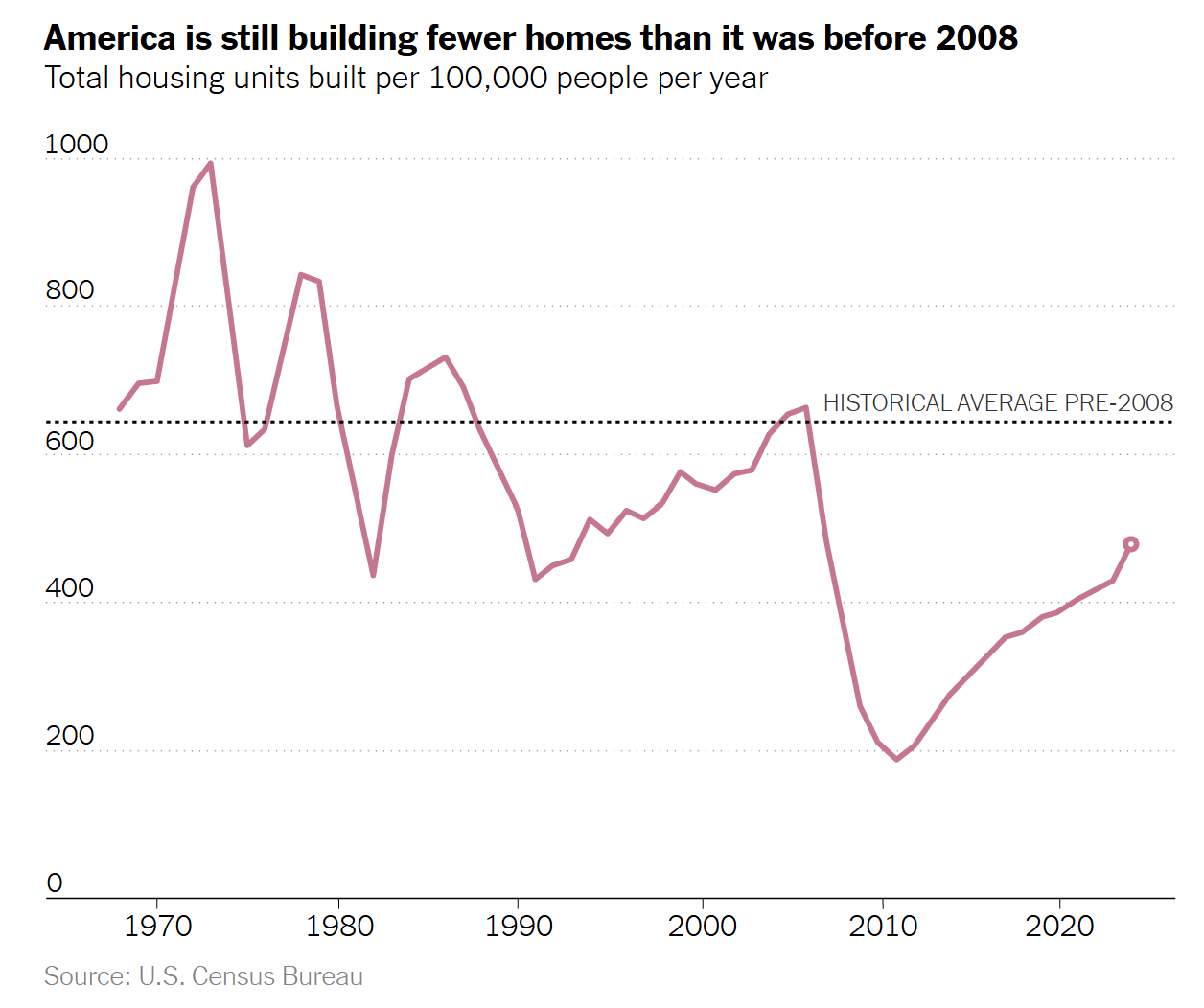
While most politicians agree on the need to address housing affordability, their proposed solutions couldn’t be further apart. On one side, there’s a push for more taxes to create affordable housing; on the other, a call for less regulation. The shared acknowledgment of the problem is overshadowed by polarizing approaches to solving it.
The current administration is focusing on housing because of the constant drumbeat of voter dissatisfaction. But what can realistically be done at a federal level? Buying more US government bonds and pressuring the Fed to lower interest rates are strategies. These actions could help, as interest rates are a huge factor in affordability. Yet I hear from many proud baby boomers who bought their first house in 1981 and paid an interest rate of 17%. What made it possible to own a home with outrageous interest rates? The average house price in 1981 was $68,000.
It's pure free market economics, less supply = higher demand = higher prices = less affordability = unhappy Americans.
What’s truly holding back new home construction? Local regulations. These are like ornaments on a Christmas tree—individually light, but when they are all hung on one side of the tree, it becomes unstable.
What are these ornaments?
On top of this spider web of fees, most city planning departments are plagued by dysfunction—endless meetings, appeals, redesigns, and consultant fees. An entire industry has emerged around navigating these inefficiencies. Time costs mone,y and it all gets passed on to the home buyer. Despite what the city councilor thinks or wants, the developers aren't eating these costs.
When a city introduces an impact-fee ordinance, they might argue, “It’s only $2,500, nobody will refuse to buy a home over that.” While that might be true, stacking ten such fees and other costly requirements would add $25,000 to a starter home, making it unaffordable.
The root of the housing affordability crisis lies at the local level. Cities are often unwilling to reduce fees, let alone incentivize new home construction by lowering real estate taxes. Experience has shown me that money given to local governments is far less efficient than money spent by those who have earned it. Shouldn’t cities want young people to buy homes? When people invest in a community, they help improve it.
The most effective way to address the housing crisis is to persuade cities and counties to reduce fees, streamline approvals, allow innovative construction products and methods and eliminate unnecessary requirements. These are the levers that would begin to turn the ship towards more homeownership in the U.S.
LOAD MORE
2 MIN READ
Drew Dolan
September 09, 2024
3 MIN READ
Drew Dolan
July 20, 2024
